
Related topics
"Informacin sobre los Hantavirus: Lo que Usted Debe Saber para
Prevenir la Enfermedad del Sndrome Pulmonar por Hantavirus"
Available
online
in Adobe Acrobat reader format.
Hantaviruses are a group of viruses that may be carried by some rodents. Some hantaviruses can cause a rare but deadly disease called hantavirus pulmonary syndrome. The disease is called HPS for short.
Only some kinds of mice and rats can give people hantaviruses that cause HPS. In North America, they are the deer mouse, the white-footed mouse, the rice rat, and the cotton rat. However, not every deer mouse, white-footed mouse, rice rat, or cotton rat carries a hantavirus. Other rodents, such as house mice, roof rats, and Norway rats, have never been known to give people HPS. Since it is hard to tell if a mouse or a rat carries a hantavirus, it is best to avoid all wild mice and rats and to safely clean up any rodent urine, droppings, or nests in your home. Dogs and cats cannot give people hantavirus infections.
Any man, woman, or child who is around mice or rats that carry harmful hantaviruses can get HPS. You do not have to already be sick to be at risk for HPS. Healthy people have become ill with HPS. While HPS is a very rare disease, cases have occurred in all regions of the United States except for Alaska and Hawaii.
These are some of the mice and rats that can carry hantaviruses in the United States


Deer mouse (left)
Cotton rat (right)
People get HPS when they breath in hantaviruses. This can happen when rodent urine and droppings that contain a hantavirus are stirred up into the air. People can also become infected when they touch mouse or rat urine, droppings, or nesting materials that contain the virus and then touch their eyes, nose, or mouth. They can also get HPS from a mouse or rat bite.
Here are some activities that can put people at risk for HPS:
In the United States, there has never been a case in which a person with HPS has given the disease to another person.
If people get HPS, they will feel sick 1 to 5 weeks after they were around mice or rats that carried a hantavirus. At first people with HPS will have:
After a few days they will have a hard time breathing. Sometimes people will have headaches, dizziness, chills, nausea, vomiting, diarrhea, and stomach pain. Usually, people do not have a runny nose, sore throat, or a rash.
General-purpose household disinfectant. Make sure the word disinfectant is written on the label.
OR
Bleach and water solution. Mix 1 1/2 cups of household bleach with 1 gallon of water.
Some materials mice and rats use to build their nests include paper, tissues, insulation, and the stuffing from furniture.
If you live in the western United States, you may be at risk for plague carried by fleas from rodents. Use insect repellent (containing DEET) on clothing, shoes, and hands to reduce the risk of flea-bites while picking up dead rodents. Contact your local or state health department to find out if plague is a danger in your area and for more information on other fleacontrol methods.
Some mice and rats can carry harmful diseases, such as HPS, leptospirosis, lymphocytic choriomeningitis, plague, and typhus. The best way to protect you and your family from these diseases is to keep mice and rats out of your home.
Keep traps away from children and pets.
Use only snap traps. Glue traps and live traps should not be used. These traps can scare the caught live mice and rats and cause them to urinate. This may increase your chance of getting sick.
Place trap so it makes a T with the wall
Keep traps and bait out of reach from children and pets.
If you live in the western United States, you may be at risk for plague carried by fleas from rodents. Use insect repellent (containing DEET) on clothing, shoes, and hands to reduce the risk of flea-bites while picking up dead rodents. Contact your local or state health department to find out if plague is a danger in your area and for more information on flea-control methods.
Place bait where you have seen mice or rats
For more information about hantavirus pulmonary syndrome or rodent control, call your state or local health department. Or call the Centers for Disease Control and Prevention (CDC) at 1-877-232-3322
Clean-up tip:
How To Clean Up After Mice and Rats
How to clean up mouse and rat urine and droppings:
How to clean up a dead mouse or rat in a snap trap and how to clean up a rodent nest:
Nesting Materials:
How to clean out cabins, sheds, barns, or other outbuildings:
Why keep mice and rats out of your home?
What you can do inside your home:
How To Keep Mice and Rats Out of Your Home
What you can do outside your home:
Where to look for gaps and holes outside your home:
Where to look for gaps or holes inside your home:
How to seal gaps and holes inside and outside your house:
Trapping tips:
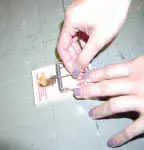
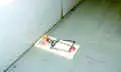
How to use snap traps:
How to use poison baits:
Important trapping and bait reminders:
Free CDC
Facts About Hantavirus Booklet (PDF)
Ways to save money AND help the environment:
Save water AND money with this showerhead adapter, it lets the water flow until the water is hot, then shuts off water flow until you restart it, ShowerStart TSV Hot Water Standby Adapter

Protect your health with these:
Mattress Dust mite-Bedbug protector, 100% Waterproof, Hypoallergenic, Zippered
Handheld Allergen Vacuum Cleaner with UV Sanitizing for Allergies and Pet, Kills Mite, Virus, Molds, True HEPA with Powerful Suction removes Hair, Dander, Pollen, Dust ,
,
Immune Support Supplement with Quercetin, Vitamin C, Zinc, Vitamin D3
GermGuardian Air Purifier with UV-C Light and HEPA 13 Filter, R emoves 99.97% of Pollutants
HEPA Air Purifier, HEPA Air Cleaner with Washable Pre-Filter, AQI Display, ECO Mode, Sleep Mode, Pet Mode for Pets, Dust, Pollen, Removes 99.97% of Particles, Smoke, Mold, Pet Dander, Dust, Odors
Interesting Reads:
THE PREPPER'S CANNING & PRESERVING BIBLE: [13 in 1] Your Path to Food Self-Sufficiency. Canning, Dehydrating, Fermenting, Pickling & More, Plus The Food Preservation Calendar for a Sustainable Pantry
The Backyard Homestead: Produce all the food you need on just a quarter acre! P aperback
The Citizens' Guide to Geologic Hazards: A Guide to Understanding Geologic Hazards Including Asbestos, Radon, Swelling Soils, Earthquakes, Volcanoes
The Uninhabitable Earth: Life After Warming
Book: The Sixth Extinction:
An Unnatural History Paperback
 "Facts
About Hantavirus" Brochure
"Facts
About Hantavirus" Brochure  [PDF
- 182 KB]
[PDF
- 182 KB] .
.